Freya Vogel · 7 October 2026
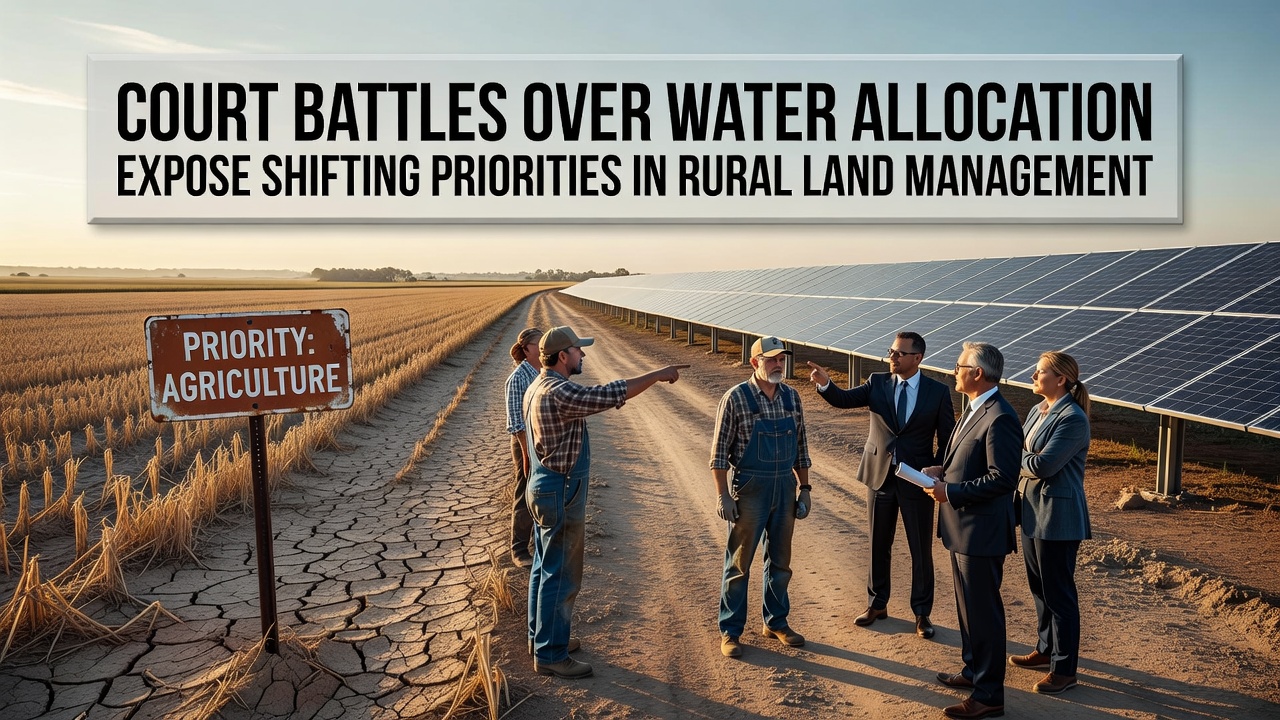
Courtroom Clashes Over Water Distribution Reveal New Directions in Rural Land Stewardship
Legal proceedings across several regions have brought attention to how water allocation decisions intersect with broader changes in rural land management practices, and data from federal agencies show an increase in such cases since the early 2020s. Researchers at institutions tracking resource disputes note that courts now handle conflicts involving agricultural users, municipal suppliers, and environmental protections more frequently than in previous decades.
Background on Allocation Disputes
Water rights frameworks in the western United States originated in the 19th century under doctrines that prioritized beneficial use and seniority, yet recent filings indicate courts increasingly weigh ecological needs alongside traditional claims. Figures released by the Bureau of Reclamation reveal that interstate compacts governing major river systems have faced challenges in multiple states during 2025 and into 2026. Observers point out that these proceedings often involve overlapping permits for irrigation districts, wildlife refuges, and growing suburban developments.
One notable pattern involves senior agricultural rights holders facing calls to transfer portions of their allocations to downstream urban centers or restoration projects. Administrative records from October 2026 document several hearings where judges reviewed evidence on aquifer depletion rates and seasonal flow variations. Those proceedings have prompted discussions about updating measurement standards and enforcement mechanisms that had remained largely unchanged for generations.
Key Cases Shaping Current Trends
In the Colorado River basin, litigation initiated by multiple states has centered on shortage declarations and their effects on farming operations that rely on canal deliveries. Court documents show arguments over reservoir storage targets and the timing of cutbacks, with data indicating reduced snowpack contributing to lower inflows. Similar disputes have emerged in the Central Valley of California, where groundwater sustainability plans required under state law intersect with federal project operations.
Across the Atlantic, the European Union's Water Framework Directive has generated parallel administrative reviews in member states, and reports from the European Environment Agency highlight enforcement actions against over-abstraction in rural catchments. These reviews emphasize integrated river basin management that incorporates both agricultural productivity targets and habitat conservation objectives. Academic analyses from institutions in Australia have compared outcomes under the Murray-Darling Basin Plan, noting shifts toward market-based trading mechanisms that allow temporary transfers during dry periods.
Impacts on Land Use Patterns
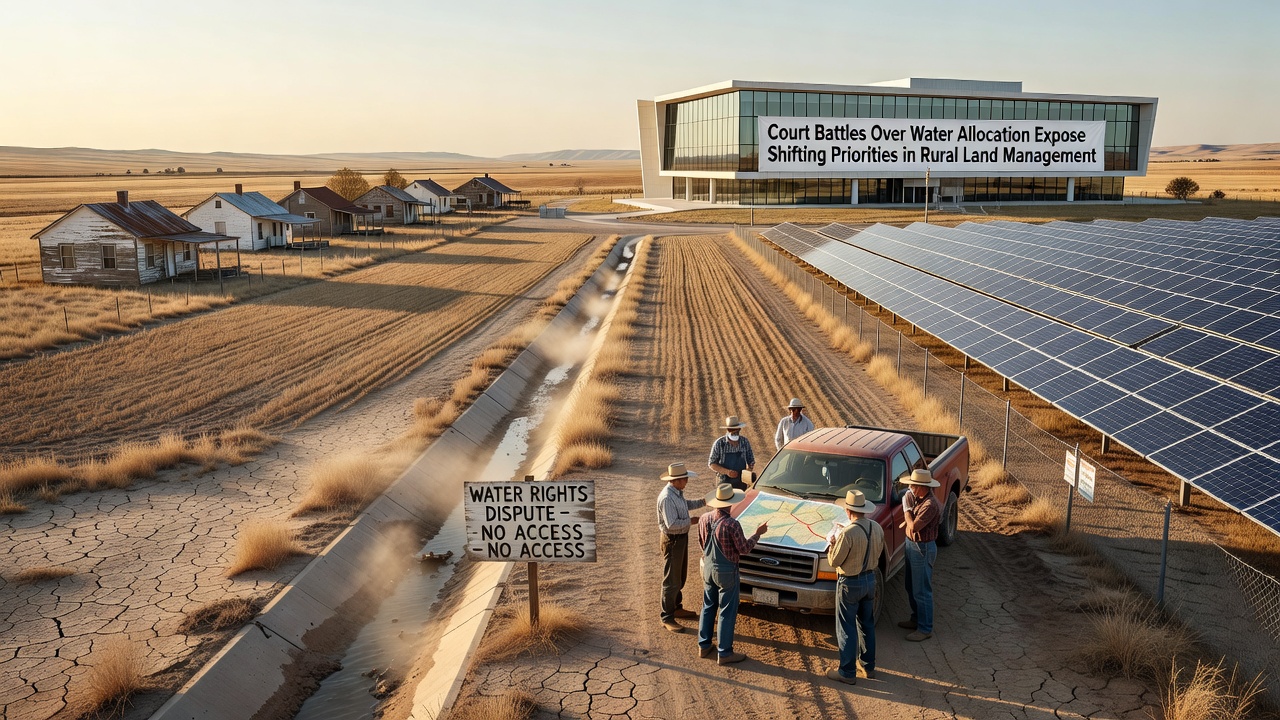
Land management agencies report that uncertainty over future water deliveries influences decisions about crop selection, fallowing schedules, and investment in efficiency upgrades. Statistics compiled by the United States Department of Agriculture indicate a measurable increase in the conversion of irrigated acreage to dryland operations or conservation easements in certain basins. Rural counties have adjusted zoning ordinances and economic development plans in response to these evolving water realities, with some areas prioritizing agritourism or renewable energy installations over traditional row crops.
Those who've examined permit databases observe that transfers of water rights from agricultural to municipal uses have accelerated in states with active adjudication processes. Engineering assessments submitted in ongoing cases detail the infrastructure modifications required to support such transfers, including pipeline extensions and metering installations. Evidence presented during October 2026 proceedings further illustrates how soil health monitoring now factors into evaluations of long-term viability for remaining irrigated lands.
Emerging Policy Responses
Legislative bodies in affected regions have introduced measures to streamline dispute resolution and encourage voluntary agreements before matters reach full litigation. Federal funding allocations for watershed restoration projects now include provisions that tie disbursements to measurable improvements in allocation transparency. Industry associations representing both agricultural producers and water utilities have participated in stakeholder forums aimed at developing shared data platforms for real-time usage tracking.
International comparisons show that countries with centralized permitting systems often experience fewer court interventions, whereas decentralized models tend to generate more case-by-case adjudications. Research papers from Canadian universities have examined provincial approaches in the Prairie provinces, where drought management plans incorporate triggers for priority adjustments without requiring individual lawsuits.
Conclusion
Proceedings documented through late 2026 demonstrate that water allocation conflicts continue to serve as indicators of broader transitions in how rural landscapes are valued and utilized. Government statistics and academic reviews together illustrate the interplay between legal frameworks, hydrological data, and land use incentives. Continued monitoring by regulatory bodies will determine whether negotiated settlements or further judicial rulings shape the next phase of resource management strategies.